
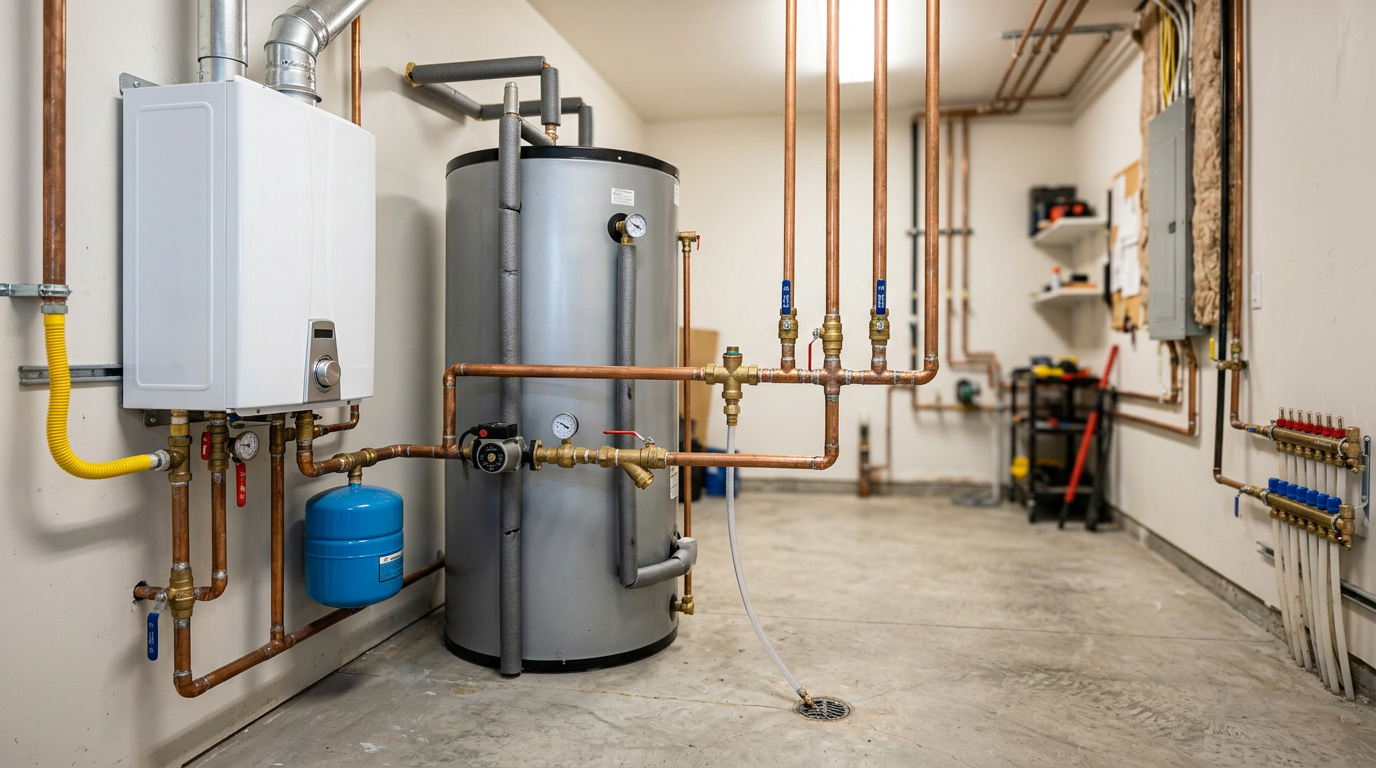
Hot water demands spike dramatically during prairie winters as incoming groundwater temperatures dip near freezing. When cold municipal water enters your heating tank, your system must work nearly twice as hard to maintain comfortable domestic temperatures for showers, dishwashing, and laundry. For reliable performance and longevity from your water heater saskatoon home systems, regular sediment flushing and sacrificial anode rod inspections are indispensable steps.
Key Questions Answered:
- Why does my hot water run out faster in winter? Incoming groundwater drops from roughly 15°C in summer to near 4°C in winter, requiring greater thermal energy to heat each gallon.
- How often should a residential water heater tank be flushed? Water heating tanks should be drained and flushed annually to remove mineral scale and calcium buildup per Health Canada residential plumbing standards.
- Are tankless water heaters practical for Saskatchewan winters? Yes, modern high-BTU condensing tankless models easily handle high temperature rises while eliminating standby heat loss.
Key Takeaways for Hot Water Systems
- Flushing accumulated mineral sediment prevents popping noises, lower heating capacity, and premature tank corrosion.
- Replacing a depleted sacrificial anode rod every 3 to 5 years can double the operating lifespan of a standard hot water tank.
- Switching to an on-demand tankless system frees up valuable utility space and delivers continuous hot water for growing households.
The Growing Need for High-Performance Water Heating
Water heating represents the second-largest energy expense in Canadian homes, trailing only space heating. In Saskatoon, hard water minerals combined with extreme seasonal temperature fluctuations accelerate scale formation inside tanks and around heating elements.
As calcium and magnesium settle at the bottom of the tank, they form an insulating crust between the natural gas burner and the water. This forces the burner to run longer and burn hotter, weakening the steel base and eventually causing leaks. Routine preventative maintenance safeguards against water damage and keeps operating costs predictable.
Seasonal Water Heater Maintenance in Practice
Following a step-by-step maintenance schedule protects your plumbing and ensures safe operation:
- Draining and Flushing Sediment: Connect a garden hose to the tank drain valve at the base. Open the valve to flush out cloudy water and mineral flakes until the discharge runs clear.
- Sacrificial Anode Rod Inspection: The anode rod attracts corrosive elements in the water to protect the tank’s steel lining. Once the magnesium or aluminum coating is eaten away to the bare wire core, the tank itself begins rusting.
- Temperature and Pressure Relief (TPR) Valve Testing: Lift the test lever on the TPR valve briefly to confirm water discharges freely into the drain pipe and shuts off completely without leaking.
- Thermostat Calibration: Keep tank water set to at least 60°C (140°F) to prevent bacterial growth such as Legionella, while utilizing thermostatic anti-scald mixing valves at fixtures for safety.
- Checking Gas Supply and Venting: Inspect the draft hood, exhaust venting, and burner assembly for signs of soot or corrosion.
Warning Signs Your Hot Water Tank Is Failing
Catching water heater issues early prevents flooded basements and sudden cold showers:
- Popping or Rumbling Sounds: Boiling water trapped beneath heavy sediment layers creates steam pockets that pop loudly during heating cycles.
- Rusty or Discolored Water: Brownish or metallic-tasting hot water indicates internal tank rust or an exhausted anode rod.
- Moisture or Pooling Near the Tank Base: Small leaks around fittings or through the outer jacket signal thermal fractures and imminent tank failure.
- Declining Hot Water Volume: If hot water runs out halfway through a normal shower, either the lower electric heating element has failed or thick sediment has displaced tank capacity.
Storage Tanks vs. Tankless Water Heaters: Which Is Right for You?
Choosing between traditional storage tanks and on-demand tankless systems depends on household size and water consumption patterns:
- Standard Storage Tanks: Lower upfront installation cost and straightforward mechanical operation. However, they suffer from standby heat loss and provide a finite volume of hot water before needing recovery time.
- On-Demand Tankless Units: Heat water instantly through high-efficiency copper or stainless steel heat exchangers. They offer continuous hot water, take up virtually no floor space, and boast service lifespans of 20+ years when properly descaled.
- Energy Efficiency and Utility Impact: Tankless units only burn fuel when a hot water tap is opened, reducing gas consumption by up to 30% compared to older standard tanks.
Tailored Solutions for Residential and Commercial Properties
Every Saskatoon home has distinct plumbing layouts and utility requirements:
- High-Demand Family Homes: Benefit from dual tankless units linked in parallel or high-recovery 50-to-60 gallon power-vent gas tanks to support multiple simultaneous fixtures.
- Basement Suites and Secondary Suites: Compact point-of-use or direct-vent wall-mounted units provide independent billing and dedicated hot water.
- Hard Water Areas: Installing a whole-home water softener upstream drastically reduces descaling frequency and extends equipment life.
Why Choose RYP Mechanical Inc for Water Heating in Saskatoon
From routine tank flushing to emergency water heater replacements, RYP Mechanical Inc delivers dependable service across Saskatoon and surrounding communities. Our Red Seal certified plumbers bring over 24 years of hands-on expertise, working with top manufacturers to ensure safe gas fitting and clean plumbing installations. We provide upfront estimates, honest recommendations, and clean workmanship you can count on.
Frequently Asked Questions
How long does a standard hot water tank last in Saskatoon?
Most traditional storage tanks last between 8 and 12 years. Regular annual flushing and anode rod replacements help maximize that lifespan despite local water hardness.
Can cold winter groundwater freeze my water heater pipes?
Interior pipes rarely freeze if your home is heated, but uninsulated plumbing near exterior walls or cold basements can suffer from draft exposure. Pipe insulation sleeves help retain heat.
What should I do if my water heater starts leaking?
Shut off the cold water inlet valve on top of the tank immediately, turn off the electrical breaker or gas supply control, and contact a licensed plumbing contractor for prompt repair or replacement.
Is a tankless water heater noisy?
No, modern tankless systems operate quietly, producing only a soft hum from the combustion fan and water flow when a hot tap is turned on.
Ensure Dependable Hot Water All Winter Long
Don’t wait for your water heater to fail during freezing weather. Proactive seasonal maintenance, anode rod checks, and efficient system upgrades ensure dependable comfort for your entire household. Contact RYP Mechanical Inc today to schedule your water heater inspection or discuss modern tankless options with our certified plumbing team.