Saskatchewan winters place extraordinary demands on residential heating systems, with extended cold snaps pushing temperatures down past minus thirty-five degrees Celsius. Operating reliable heating in these severe conditions requires proactive preparation rather than reactive emergency repairs. A systematic pre-winter heating tune-up, combined with modern high-efficiency heating technology, ensures consistent home comfort, reduces monthly utility consumption, and prevents catastrophic freeze-up events across Saskatoon.
Executive Summary: Preparing your home heating system ahead of severe Saskatchewan weather protects against costly mid-winter breakdowns. Modern 97% AFUE furnaces deliver substantial fuel savings while qualifying for SaskEnergy replacement rebates. A comprehensive multi-point inspection ensures safe, reliable operation throughout the entire heating season.
Key Takeaways
- Proactive Maintenance Prevents Failure: Fall heating tune-ups identify worn igniters, dirty flame sensors, and compromised heat exchangers before severe freezes arrive.
- Higher Efficiency Standards: Qualifying for the updated SaskEnergy equipment rebate now requires high-efficiency furnaces operating at 97.0% AFUE or higher.
- Balanced Airflow & Safety: Fresh high-MERV filter replacements, exhaust vent clearing, and digital combustion analysis keep indoor air healthy and energy bills low.
Understanding Extreme Winter Demands on Saskatoon Heating Systems
During peak winter months across Saskatoon, home furnaces run almost continuously to counteract rapid building heat loss. When outdoor temperatures plummet toward minus forty degrees, even minor equipment deficiencies quickly escalate into complete heating failures. Older single-stage heating systems struggle to maintain uniform warmth across multi-level floor plans, causing drafty rooms and short-cycling.
Modern two-stage and modulating gas heating systems adjust their heat output dynamically based on real-time indoor requirements. Instead of repeatedly blasting at maximum capacity, these systems operate at lower, quieter speeds for longer cycles. This continuous air movement provides steady temperatures, eliminates cold spots, and reduces mechanical strain on critical components.
Critical Pre-Winter Furnace Checklist
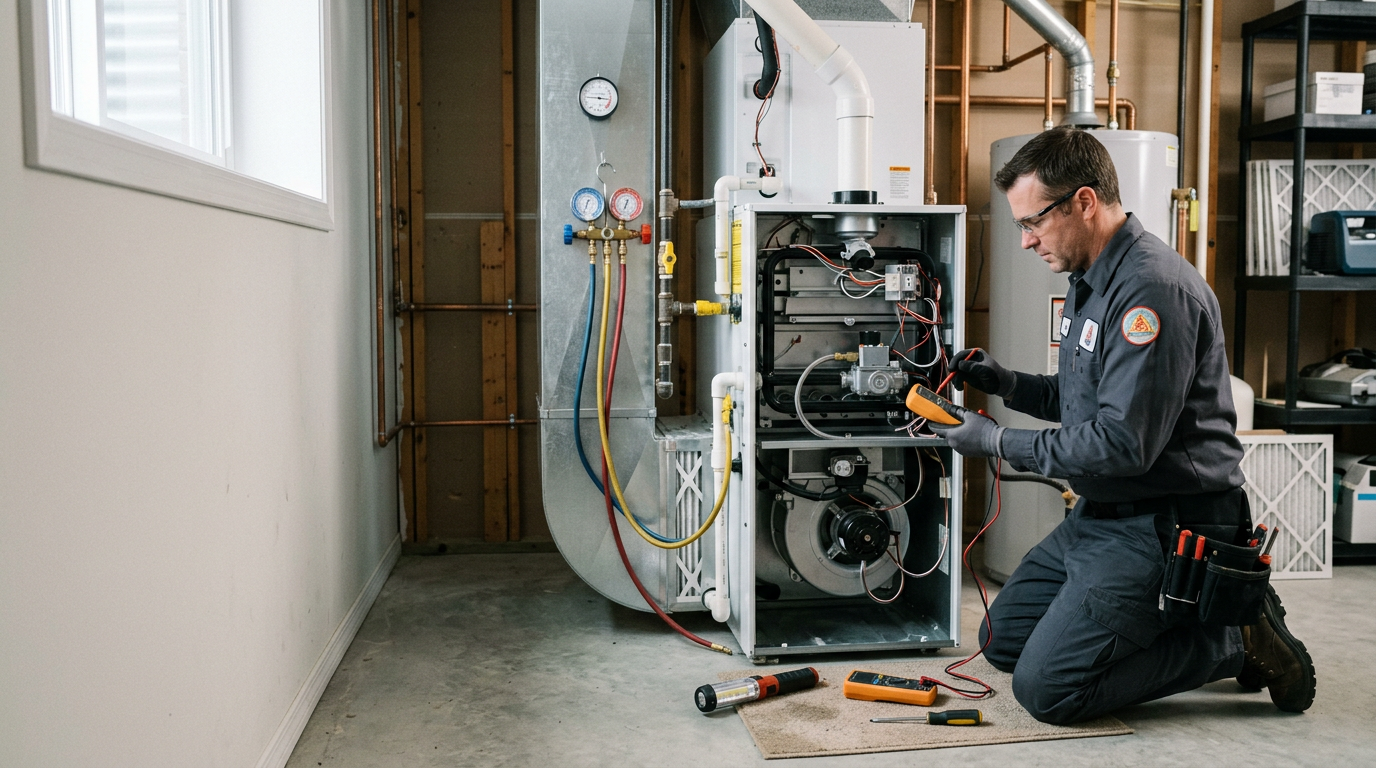
A thorough pre-season heating inspection involves far more than merely swapping out a return air filter. Heating professionals perform meticulous checks across multiple electrical, mechanical, and safety subsystems:
- Flame Sensor & Hot Surface Igniter Testing: Microscopic carbon deposits on flame sensors cause intermittent flame loss and safety lockouts. Cleaning the sensor and verifying igniter resistance prevents sudden shutdowns.
- Heat Exchanger Integrity Verification: Thermal expansion cycles over decades can cause hairline fractures in aging heat exchangers. Detecting these cracks early is essential to prevent carbon monoxide leakage into living spaces.
- Blower Motor & Wheel Cleaning: Dust accumulation on blower fan blades reduces CFM airflow, increases electrical draw, and forces the heat exchanger to run at elevated temperatures.
- Condensate Drain Line Flushing: High-efficiency condensing furnaces produce acidic moisture during normal operation. Clearing drain traps and heat-taping exposed lines prevents condensate freezing and system shutdowns.
- Combustion Analysis: Measuring oxygen, carbon monoxide, and exhaust gas temperatures ensures fuel burns cleanly and efficiently.
Homeowners can review the official requirements through the SaskEnergy Equipment Replacement Rebate guide to learn about current energy standards and equipment qualifications across Saskatchewan.
Navigating High-Efficiency Upgrades and Equipment Rebates
If your heating system is more than fifteen years old or facing frequent repairs, upgrading to a high-efficiency model offers substantial long-term benefits. SaskEnergy updated its equipment replacement rebate program to focus exclusively on top-tier efficiency. Homeowners upgrading their primary space heating to a furnace certified at 97.0% AFUE or higher can receive equipment rebates while lowering natural gas consumption by up to twenty-five percent compared to older mid-efficiency equipment.
The table below highlights the performance differences between heating system tiers commonly found across Saskatoon homes:
| System Category | AFUE Rating | Airflow Delivery | Rebate Eligibility |
|---|---|---|---|
| Older Mid-Efficiency | 80% – 82% | Single-stage standard motor | None |
| Standard Condensing | 92% – 95% | Multi-speed blower | Ineligible (sub-97%) |
| Premium High-Efficiency | 97.0%+ AFUE | Modulating ECM motor | Eligible ($325 SaskEnergy Rebate) |
Tailored Solutions for Saskatoon Properties
Every home layout, insulation profile, and ductwork network requires a customized heating strategy to achieve optimal comfort and efficiency:
- Character & Heritage Homes: Older properties in established Saskatoon neighborhoods often feature undersized return air ducts. Modulating furnaces paired with variable-speed ECM blowers compensate for static pressure challenges.
- Modern Multi-Story Builds: Newer two-story builds benefit from customized zoning dampers and continuous fan circulation to balance temperatures between main living areas and upper bedrooms.
- Acreages & Rural Properties: Homes located outside city limits face severe wind chills. Ensuring proper intake and exhaust pipe termination prevents snow drifts from choking combustion air.
Why Choose RYP Mechanical Inc
RYP Mechanical Inc brings over twenty-four years of hands-on industry experience to every heating, cooling, and mechanical project across Saskatoon and surrounding communities. Our certified Red Seal technicians specialize in comprehensive furnace tune-ups, emergency heating repairs, and precision high-efficiency installations. We believe in honest recommendations, transparent upfront pricing, and delivering dependable craftsmanship built to withstand harsh prairie winters.
Frequently Asked Questions
How often should furnace filters be replaced during Saskatchewan winters?
Standard one-inch pleated filters should be checked monthly and replaced every 30 to 60 days during peak heating months. Thicker four-to-five-inch media filters typically last four to six months but should be inspected before the start of the deep freeze.
What causes a furnace to blow cold air during a cold snap?
A furnace blowing cold air is usually experiencing a high-limit safety trip caused by restricted airflow (dirty air filter), a malfunctioning flame sensor, or a tripped ignition control board. Turning off the thermostat and calling a certified technician prevents further mechanical strain.
What AFUE rating is required for current SaskEnergy furnace rebates?
Under current program guidelines, replacement natural gas furnaces must achieve a minimum annual fuel utilization efficiency of 97.0% AFUE and be installed by a licensed gas contractor.
How does a cracked heat exchanger pose a safety hazard?
A cracked heat exchanger allows combustion by-products, including deadly carbon monoxide, to mix directly with the circulating household airstream. Annual inspections verify heat exchanger integrity to keep families safe.
Summary & Next Steps
Investing in pre-winter heating maintenance and high-efficiency equipment guarantees safe, continuous comfort through the harshest winter days. RYP Mechanical Inc is dedicated to keeping Saskatoon homes warm, safe, and energy-efficient all season long. Schedule your comprehensive furnace inspection and heating assessment today to protect your home before temperatures drop.